
🔊 Sound – Class 9 Science Lesson

📘 What You Will Learn in This Lesson
This chapter explores sound as a form of energy and its journey through different mediums.
Alongside CBSE Class 9 content, we’ll also build a foundation for Class 11 Physics by introducing basic wave mechanics and real-world applications of sound.

🌊 Nature and Propagation of Sound
- Sound is a **mechanical wave** — it needs a medium (solid, liquid, or gas) to travel.
- It travels in the form of **longitudinal waves**, where particles vibrate **parallel** to the direction of motion.
- Transverse waves are also introduced to compare and contrast wave types.
Advanced Link: In Class 11, we study waves mathematically using equations and the concept of phase and superposition.
📈 Characteristics of Sound Waves
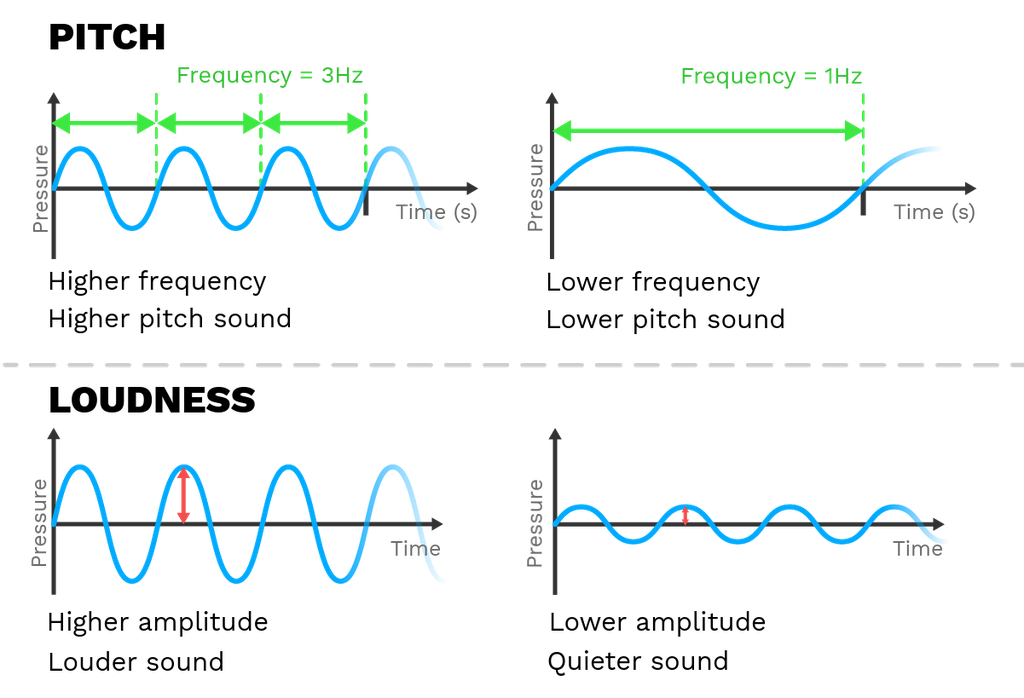
We’ll study graphical representation of sound waves and understand key terms like:
- Wavelength (λ): Distance between two consecutive compressions or rarefactions
- Amplitude (A): Maximum displacement – decides the loudness
- Frequency (f): Number of vibrations per second, measured in Hertz (Hz)
- Time Period (T): Time taken for one complete vibration
- Velocity (v): Speed of the wave through a medium
Wave Equation: v = f × λ
Advanced Link: In higher classes, this equation becomes part of **wave motion equations** and **harmonic motion** discussions.
🎸 Production of Sound
- Sound is produced by **vibrating objects**: strings (guitar), air columns (flute), membranes (drums), and plates (bells).
- We explore how **frequency of vibration** determines the **pitch** of the sound.
Real-world example: Why men and women typically have different voice pitches — due to vocal cord differences.
🛤️ Propagation of Sound
- Sound travels fastest in solids, slower in liquids, and slowest in gases.
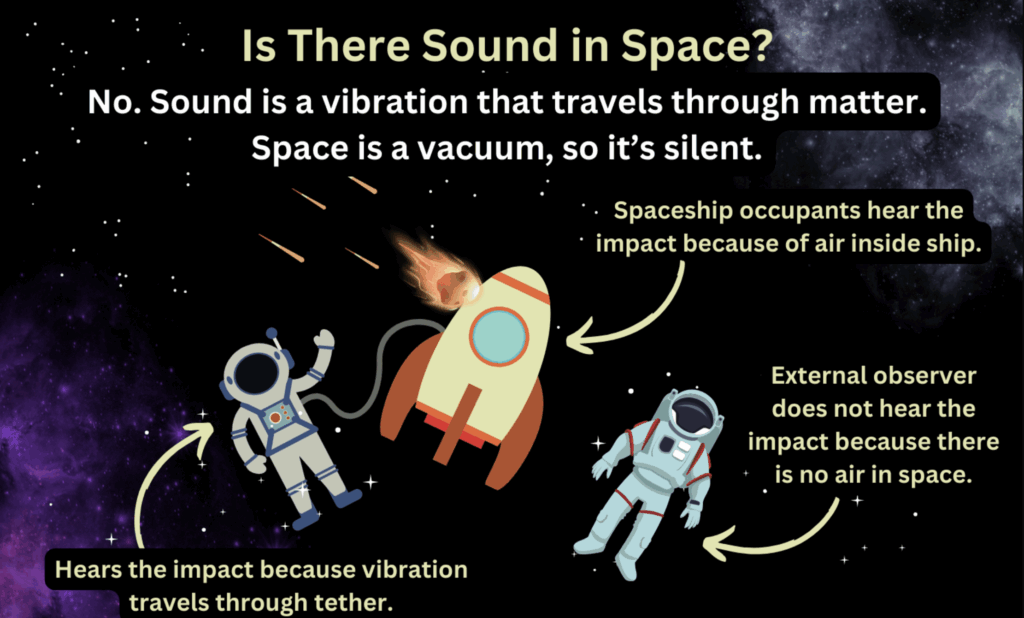
- It **cannot travel through a vacuum** – this is why space is silent.
Fun Fact: Astronauts use radios (not ears) to communicate in space because there’s no medium for sound waves.
⚡ Speed of Sound & Sonic Boom
The speed of sound in air is approximately 343 m/s at room temperature.
When an object (like a jet) moves faster than sound, it creates a **sonic boom** — a shockwave we hear as a loud explosion.
Foundation Insight: In Class 11, you’ll study the Mach number (speed relative to sound) and Doppler Effect.
🔁 Reflection of Sound
Sound reflects just like light and follows similar laws:
- Angle of incidence = Angle of reflection
- Reflected sound is useful in daily life (megaphones, stethoscopes, auditoriums)
📣 Echo & Reverberation
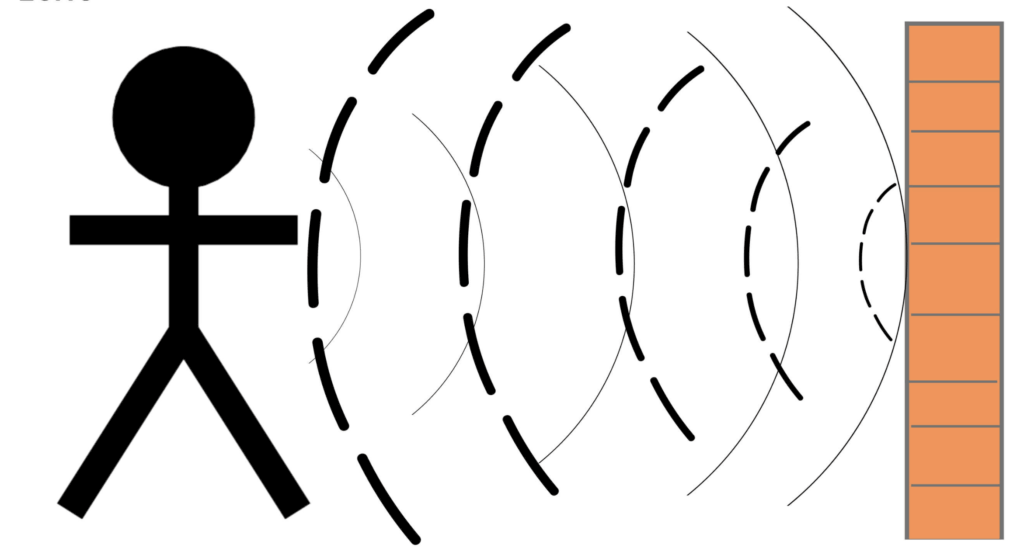
- Echo: A reflected sound heard after 0.1s (minimum 17.2m distance in air)
- Reverberation: Continuous overlapping reflections (seen in large halls)
- We’ll learn how to design spaces to reduce excess sound using curtains, panels, etc.
👂 Human Hearing & Frequency Range
- Humans hear between 20 Hz – 20,000 Hz
- Sounds below 20 Hz: Infrasonic (e.g. elephants’ calls)
- Above 20,000 Hz: Ultrasonic (used by bats, dolphins, and sonar)
🛰️ Applications of Ultrasound
- SONAR: Sound Navigation and Ranging – used in submarines, ships, and sea floor mapping
- Medical Uses: Ultrasound imaging for scanning internal organs
- Industrial Uses: Cleaning, welding, flaw detection
Advanced Insight: These applications rely on the high frequency and penetration ability of ultrasonic waves.
🧠 Structure and Working of the Human Ear
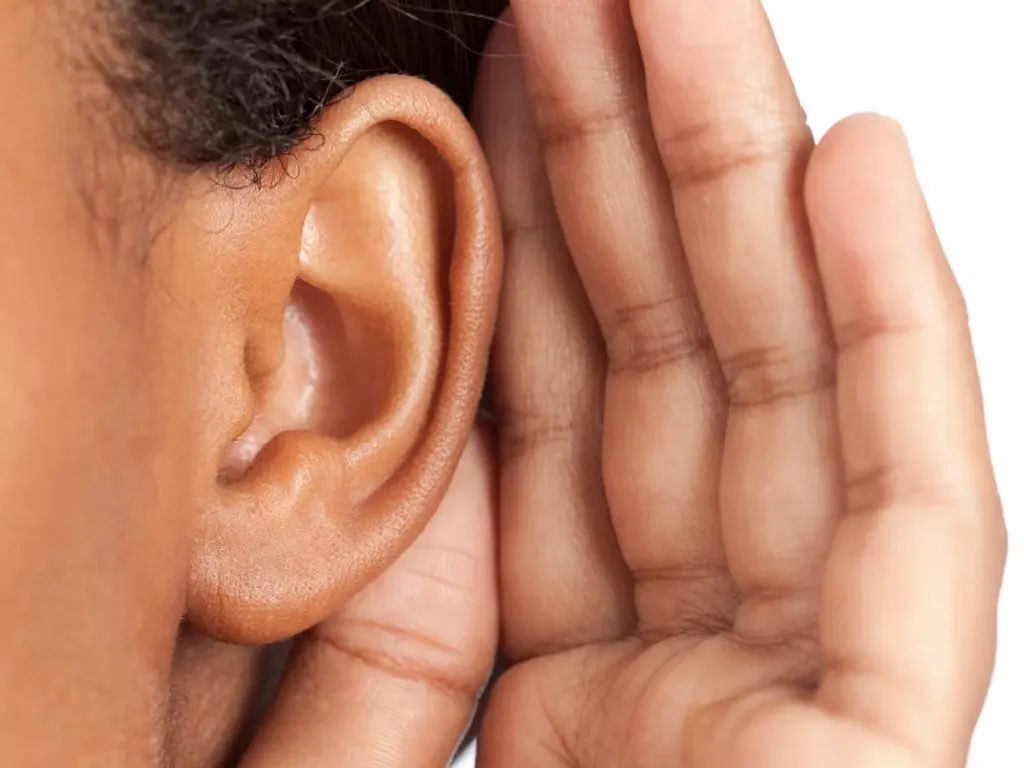
The ear converts sound waves into electrical signals for the brain. You’ll learn:
- Outer ear → collects sound
- Middle ear → amplifies sound
- Inner ear (cochlea) → converts it to nerve impulses
Extra Tip: We’ll also cover simple ways to protect your ears from noise pollution and infections.