
Potential Energy
📚 Key Concepts of Potential Energy
🔹 Real-Life Example
Water stored in a dam at height has gravitational potential energy — when released, it can turn turbines and generate electricity.
A stretched bow stores elastic potential energy that can launch an arrow.
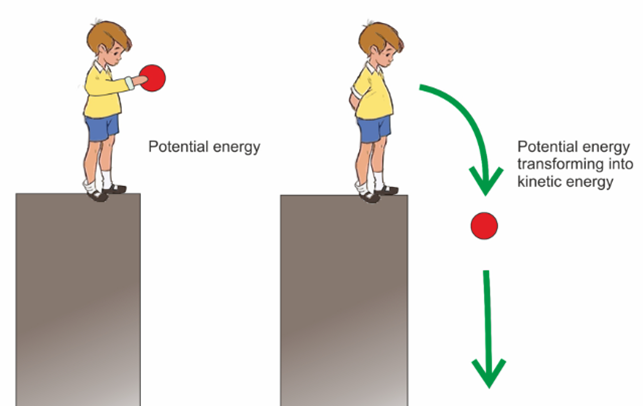
A book on a shelf has potential energy that converts to kinetic energy when it falls.
Potential Energy: The energy possessed by an object due to its position or configuration.
🧪 Important Formulas
🔸 Gravitational Potential Energy
PE = mgh
Where:
- PE = Potential energy (J)
- m = Mass of object (kg)
- g = Acceleration due to gravity (9.8 m/s²)
- h = Height above reference level (m)
🔹 Types of Potential Energy
1. Gravitational Potential Energy
- Due to position in a gravitational field
- Examples: Water in elevated tank, book on shelf
2. Elastic Potential Energy
- Due to deformation of elastic materials
- Examples: Stretched spring, compressed rubber ball

🔍 Advanced: Reference Level
Potential energy is relative — we choose a reference level (usually the ground) as zero potential energy. The actual value depends on this choice, but energy differences remain the same.
🔹 Applications of Potential Energy
- Hydroelectric power: Water at height → electricity
- Pumped storage: Store energy by pumping water uphill
- Springs: Store and release energy in mechanical systems