
Uniform Circular Motion
🌟 Introduction to Circular Motion
Have you ever been on a merry-go-round and felt that strange pulling sensation? Or wondered why satellites don’t fall down to Earth? Welcome to the world of circular motion, where objects move in circles at constant speed but with continuously changing velocity! 🎠🛰️
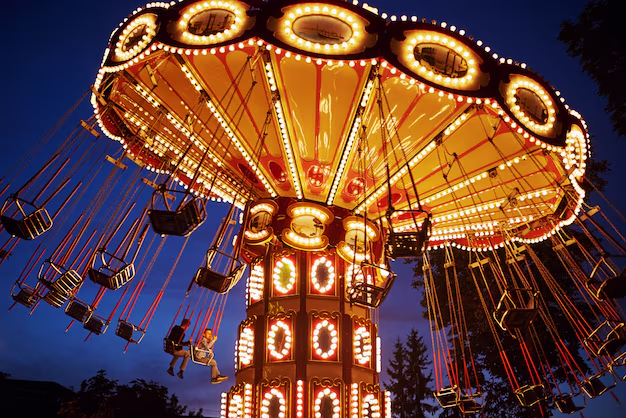
📸 Circular Motion Illustration
📚 Key Concepts
🔹 What is Circular Motion?
Definition: When an object moves along a circular path, it is said to be in circular motion.
In uniform circular motion, the object moves with constant speed, but the direction of velocity keeps changing, so acceleration is present.
🔹 Examples of Circular Motion
- 🌍 Earth around the Sun – completes one revolution in 365 days
- 🛰️ Satellite around Earth – used for GPS and communication
- 🏃♂️ Athlete on a circular track – direction constantly changes
- ⏱️ Second’s hand of a clock – completes 1 rotation in 60 seconds
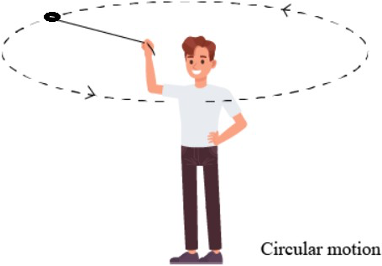
📌 Real-life Example: When you swing a ball tied to a string, it moves in circular motion.
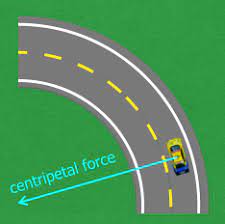
The string provides the centripetal force required to keep it moving in a circle.
🧠 Important Formulas
- Speed in Circular Motion: v = 2πr / T
- Where: r = radius, T = time period
- Centripetal Acceleration: a = v² / r