
Basics of Motion
🌟 Introduction
Have you ever noticed how a moving train seems stationary when you’re sitting inside it?
Or wondered why the moon appears to follow you when you’re walking? Let’s dive into the fascinating world of motion and discover how everything around us is constantly moving! 🚂🌙

From a butterfly fluttering its wings to planets orbiting the sun, motion is everywhere. Even when you think you’re sitting still, you’re actually moving with the Earth at incredible speeds!
Here’s an image illustrating motion:


📚 Key Concepts
🔹 What is Motion?
“An object is said to be in motion if it changes its position with respect to time.”
Motion is simply the change in position of an object with time. But here’s the catch — motion is relative! What appears moving to one person might seem stationary to another.
🔹 Movement vs Rest
- Rest: When an object does not change its position with respect to time and surroundings
- Motion: When an object changes its position with respect to time and surroundings
📌

Real-life Example: A passenger sitting in a moving bus is at rest relative to the bus but in motion relative to the road!
🔹 Distance vs Displacement
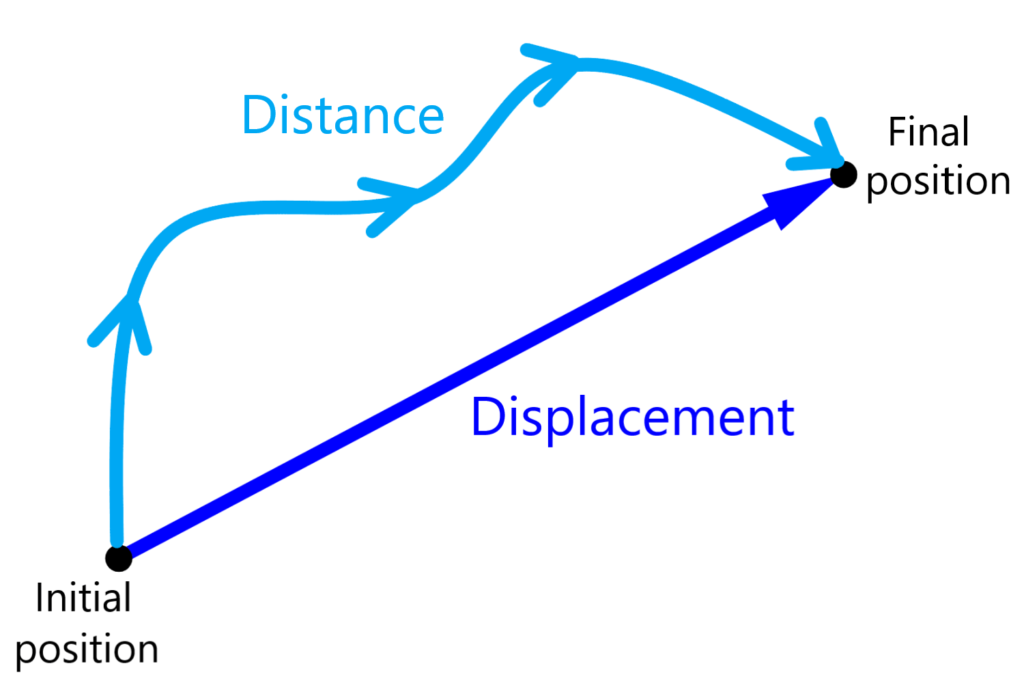
- Distance: Total path length covered by an object (always positive)
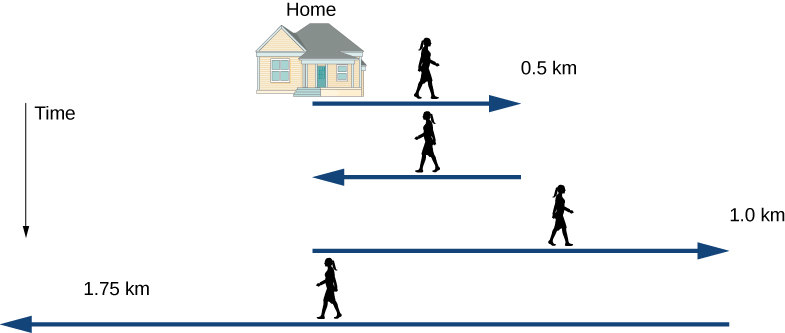
- Displacement: Shortest distance between initial and final position (can be positive, negative, or zero)
Example: If you walk 10m east, then 10m west, your distance = 20m but displacement = 0m
🔹 Scalar vs Vector Quantities
- Scalar: Quantities with only magnitude (e.g., Distance, Speed, Time)
- Vector: Quantities with both magnitude and direction (e.g., Displacement, Velocity, Acceleration)
🔹 Uniform & Non-uniform Motion
- Uniform Motion: Object covers equal distances in equal intervals of time
- Non-uniform Motion: Object covers unequal distances in equal intervals of time
📌 Real-life: A car moving at constant 60 km/h shows uniform motion, while a car in city traffic shows non-uniform motion!
🧠 Important Formulas
- Distance = Speed × Time
- Displacement = Final Position – Initial Position