
Balanced and Unbalanced Forces
📚 Key Concepts
🔹 Balanced Forces
When two or more forces acting on an object are equal in magnitude and opposite in direction, they are called balanced forces.
Net force = 0, so there is no change in the object’s state of motion.

🧩 Characteristics:
- ➖ Net force = 0
- 🛑 No acceleration
- ⚖️ Object remains at rest or continues moving at constant velocity
📌 Examples:
- 📚 A book lying on a table
- 🚗 A car moving at constant speed on a straight road
- 💪 Tug of war with equal force on both sides
🔹 Unbalanced Forces
When forces acting on an object are not equal in magnitude or not opposite in direction, they are called unbalanced forces.
This results in a non-zero net force which causes acceleration or change in motion.

🧩 Characteristics:
- ➕ Net force ≠ 0
- ⚡ Causes acceleration
- 🔄 Changes the state of motion
📌 Examples:
- 🚙 Pushing a stationary car to make it move
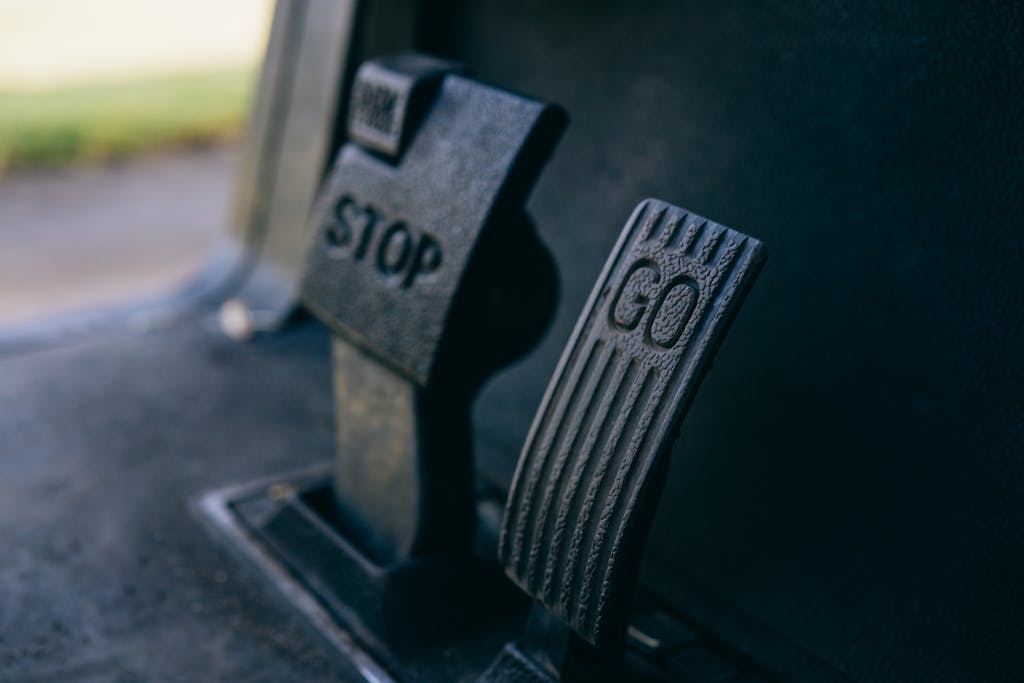
- 🛑 Applying brakes to stop a moving vehicle
- 🍎 A falling apple accelerating downward
🔹 Balanced vs Unbalanced Forces – Comparison Table
| Feature | Balanced Forces | Unbalanced Forces |
|---|---|---|
| Net Force | Zero | Non-zero |
| State of Motion | No change | Changes (accelerates/decelerates) |
| Effect | Body remains at rest or moves uniformly | Body speeds up, slows down, or changes direction |
| Examples | Book on a table, constant-speed car | Falling apple, applying brakes |
🧠 Quick Check
- Balanced = No change; Unbalanced = Acceleration
- Balanced → Net Force = 0
- Unbalanced → Net Force ≠ 0