
Mass and Weight + Weight on the Moon

📚 Key Concepts
🔹 Real-Life Example: Earth vs. Moon Weight
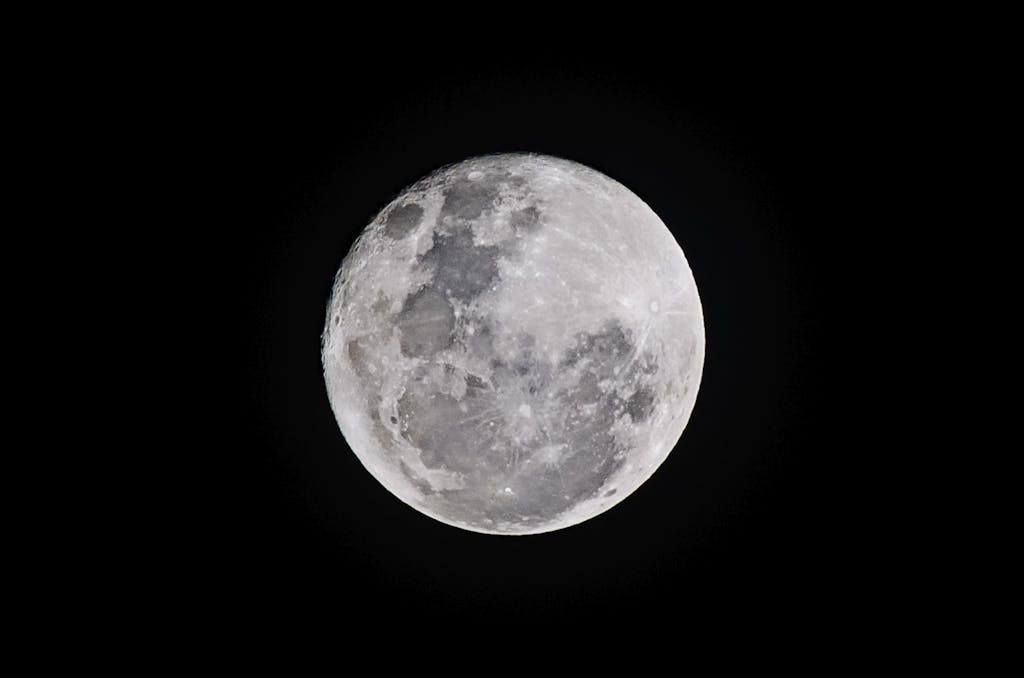
An astronaut’s mass stays 70 kg whether they’re on Earth or the Moon. However, their weight changes significantly. On Earth, they weigh about 686 N, but on the Moon only 114 N. This lighter weight lets them jump higher and move in slow motion, as seen during Moon missions.
🔹Mass: The amount of matter contained in a body Weight: The force with which a body is attracted toward the centre of the Earth.
🔹 Key Differences Between Mass and Weight
- Mass: Constant everywhere, scalar quantity, measured in kilograms (kg)
- Weight: Varies with location, vector quantity, measured in newtons (N)
🧪 Important Formulas
🔸 Weight Formula
W = mg
- W: Weight in newtons (N)
- m: Mass in kilograms (kg)
- g: Acceleration due to gravity (9.8 m/s² on Earth)
🔸 Calculating Weight on the Moon
- Moon’s gravity = 1/6 of Earth’s gravity
- Weight on Moon = (1/6) × Weight on Earth
- If you weigh 600 N on Earth, you weigh only 100 N on the Moon
🔍 Advanced: Apparent Weight in a Lift (Elevator)
- Lift moving up with acceleration: Apparent weight = m(g + a)
- Lift moving down with acceleration: Apparent weight = m(g – a)
- Lift in free fall: Apparent weight = 0 (experience of weightlessness)

🧠 Practice Questions