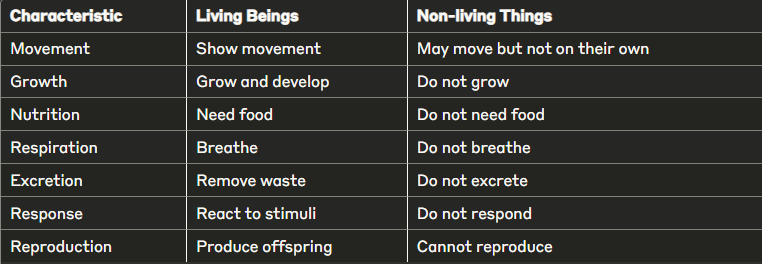
What Sets Living Apart from Non-living?
📚 Key Concepts
🔹 Characteristics of Living Beings
Living beings share seven essential characteristics that make them different from non-living things:
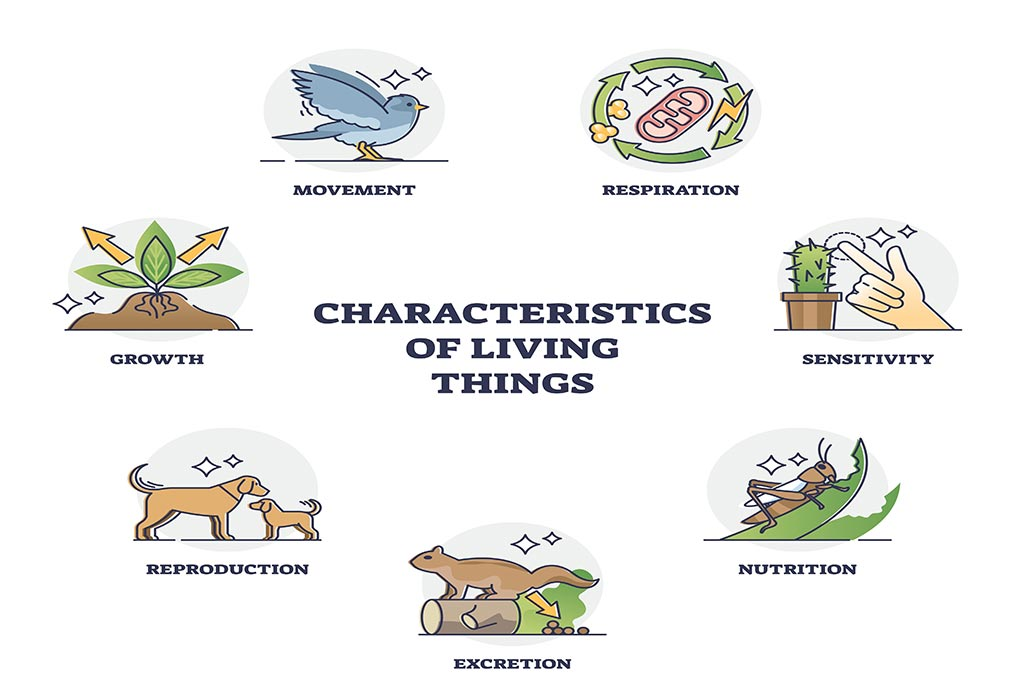
1. Movement
- All living beings show some form of movement
- Animals move from place to place
- Plants show movement in parts (flowers opening, leaves turning towards sun)
- Example: Touch-me-not plant folds leaves when touched
2. Growth
- Living beings increase in size over time
- They develop from small to large forms
- Growth requires nutrition and favorable conditions
- Example: A seed grows into a full plant
3. Nutrition (Need for Food)
- All living beings need food for energy and growth
- Plants make their own food through photosynthesis
- Animals obtain food from plants or other animals
- Food provides energy for all life processes
4. Respiration (Breathing)
- All living beings breathe to get oxygen
- Animals breathe through lungs, gills, or skin
- Plants breathe through tiny pores called stomata
- Breathing is essential for releasing energy from food
5. Excretion
- Removal of waste products from the body
- Animals excrete through urine, sweat, and exhaled gases
- Plants excrete excess water and minerals through leaves
- Example: Water droplets on grass in morning
6. Response to Stimuli
- Living beings react to changes in their environment
- Stimulus: Anything that causes a response
- Animals respond quickly (touching hot object, running from danger)
- Plants respond slowly (leaves folding at sunset)
7. Reproduction
- Process of producing offspring
- Ensures continuation of species
- Animals give birth to young ones
- Plants produce seeds that grow into new plants
🔹 Living vs Non-living Comparison