
The Water Cycle – Nature’s Recycling System
📚 Key Concepts
🔹 What is the Water Cycle?
The water cycle is the continuous circulation of water between Earth’s surface and atmosphere through evaporation, condensation, and precipitation.
🔹 Steps of Water Cycle
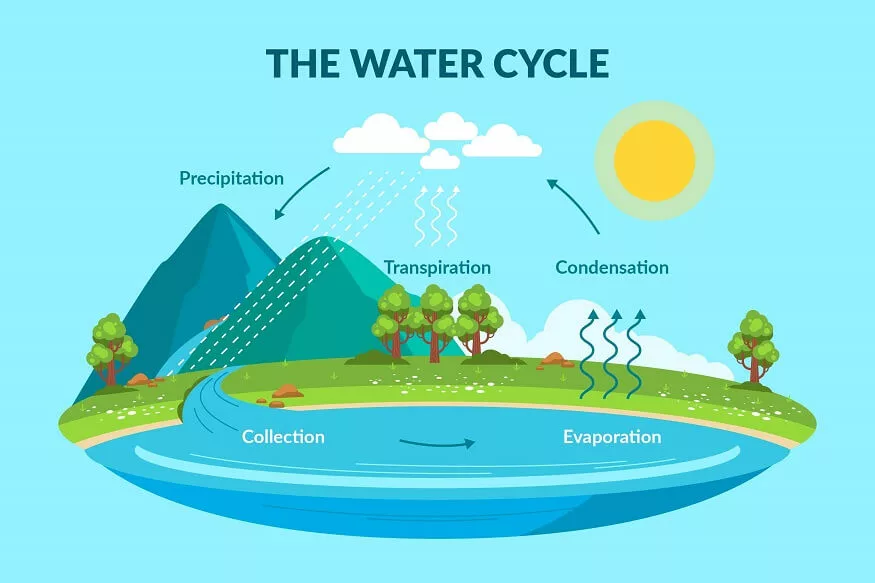
1. Evaporation
- Sun heats water in oceans, rivers, lakes
- Water evaporates and rises as invisible vapour
- Plants also release water vapour (transpiration)
2. Condensation
- Water vapour rises and cools at higher altitudes
- Vapour condenses around dust particles
- Tiny droplets form clouds
3. Precipitation
- Cloud droplets combine to form bigger drops
- Heavy drops fall as rain, snow, or hail
- Water returns to Earth’s surface
4. Collection
- Rainwater flows into rivers, lakes, oceans
- Some water seeps into ground (groundwater)
- Cycle continues endlessly
🔹 Importance of Water Cycle
Benefits:
- Provides fresh water for drinking
- Maintains water balance in nature
- Supports all life on Earth
- Cleans and purifies water naturally
Human Impact:
- Population growth increases water demand
- Pollution affects water quality
- Climate change alters water cycle patterns
- Need to conserve and protect water resources