
Evaporation – Water’s Disappearing Act
📚 Key Concepts
🔹 What is Evaporation?
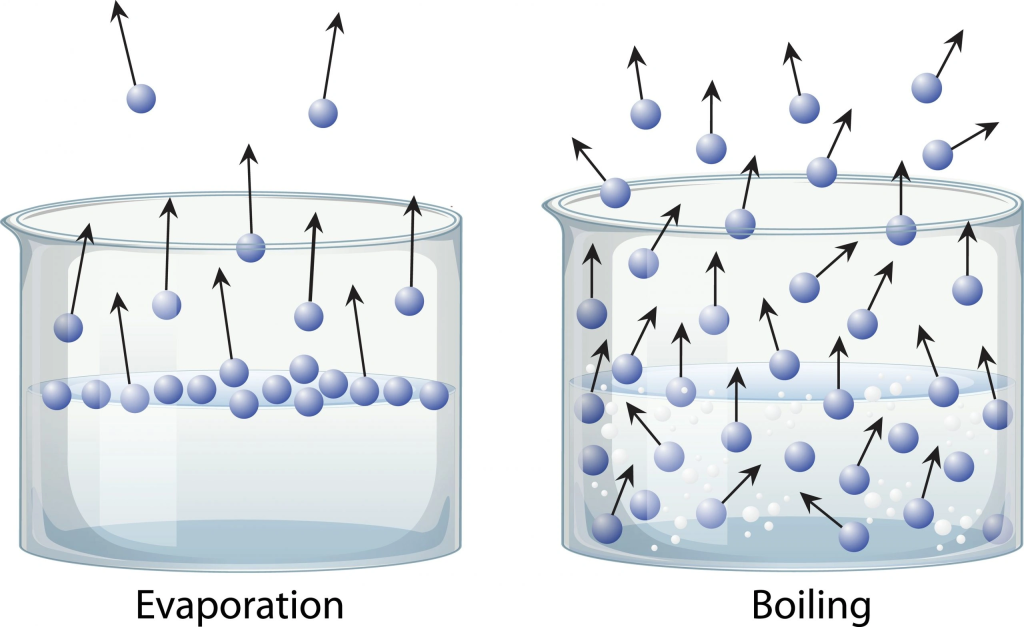
Evaporation is the process of conversion of water into its vapour state.
Key Points:
- Happens at all temperatures (even at room temperature)
- Water molecules escape from surface to become vapour
- Process is continuous but invisible
🔹 Where Do We See Evaporation?
Common Examples:
- Water from puddles disappearing after rain
- Wet clothes drying on clothesline
- Water disappearing from utensils after washing
- Sweat drying from our body
- Hand sanitizer disappearing when rubbed
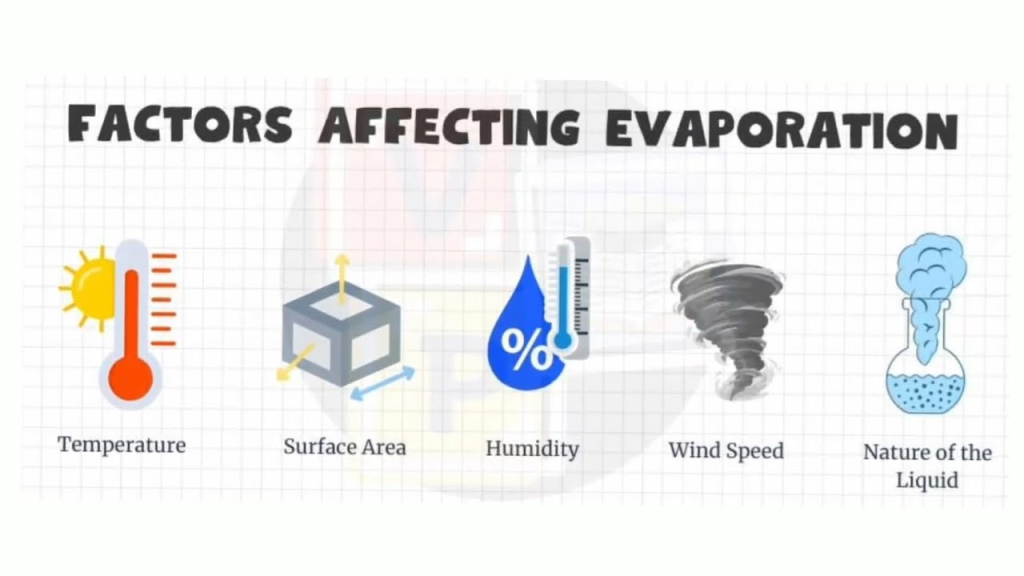
🔹 Factors Affecting Rate of Evaporation
1. Exposed Surface Area
- Larger area = Faster evaporation
- Water in plate evaporates faster than in bottle
2. Temperature
- Hot surface = Faster evaporation
- Water evaporates faster in sunlight than in shade
3. Air Movement (Wind)
- Moving air = Faster evaporation
- Clothes dry faster on windy days
4. Humidity
- Low humidity = Faster evaporation
- High humidity (rainy days) = Slower evaporation
🔹 Cooling Effect of Evaporation
Why does evaporation cause cooling?
- Water molecules need energy to escape as vapour
- This energy comes from surroundings, causing cooling
Real-life Applications:
- Earthen pots (Matka): Water seeps through pores and evaporates, cooling remaining water
- Sweating: Body cools down as sweat evaporates
- Sprinkling water on roof: Cools the surface
- Desert coolers: Use evaporation to cool air