Sexual Reproduction in plants
Sexual Reproduction in plants involves the fusion of male and female gamete to form Zygote. Which develops into a new plant. Lets study Sexual Reproduction in flowering plants in details.
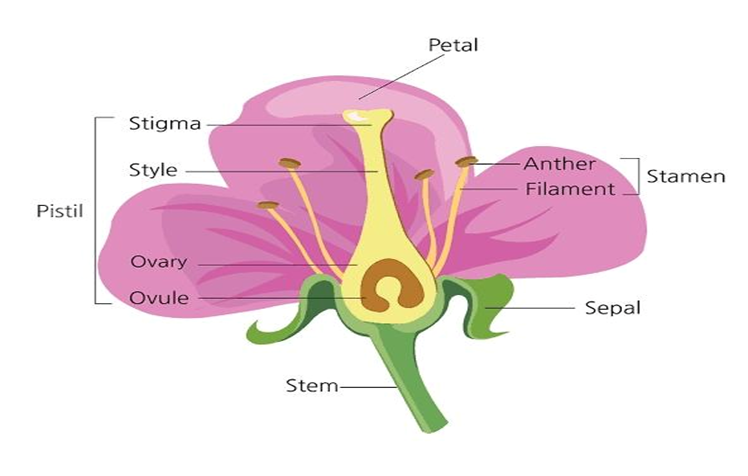
Parts of flowers:-
Calyx(sepals):-
- Outermost green part of the flower
- Function:- protect the bud before it’s opening.
- Collectively called calyx
Corolla(petals):-
- Usually Brightly coloured
- Function:- Attract pollinators(like; bees, and butterflies)
- Collectively called corolla
Androecium(male reproductive part):-
- Made of stamens
- Anther; produces pollen grains, Filament; stalk that holds the anther.
- Collectively called Androecium
Gynoecium(female reproductive part):-
- Also called Pistil or carpel
- Made of:- stigma:- Sticky surface that receive pollen. Style:- Tube connecting stigma to ovary. Ovary:- Contains ovules(female gametes)
- Ovary becomes fruits ovules become seeds.
Steps of sexual Reproduction in plants:-
Pollination
The transfer of male gamete (pollen grains) from anther to stigma is called pollination.
Type of Pollination:-
- Self Pollination- Pollination between same plant or same flower.
- Cross Pollination- Pollination between different plants.
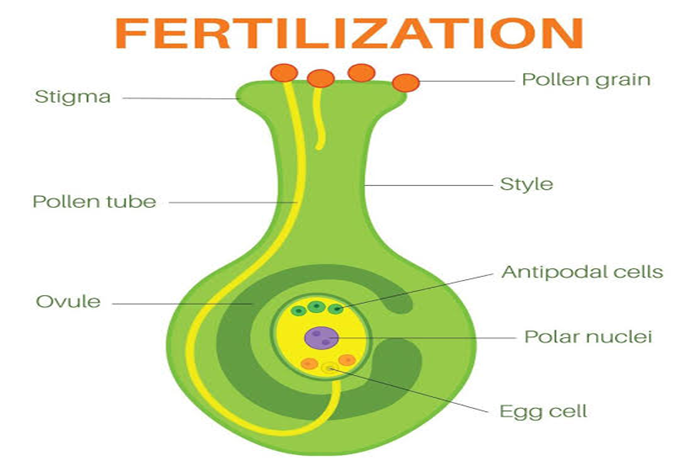
Fertilization
Pollen grains grows a pollen tube down the style to the ovule. Then the male gamete travels and fuses with the egg in the ovuleàZygote is formed.
Zygote development
Zygote development into embryo inside the ovule, and the ovule becomes seed.
The fertilized ovule develops into a seed.
Seed contains:-
- Embryo:- baby plant
- Seed coating:- outer Protective covering
- Cotyledons:- seed leaves, store food
Ovary becomes fruits
The ovary (lower part of pistil develops into a fruit).
Fruit encloses the seeds and protect them.
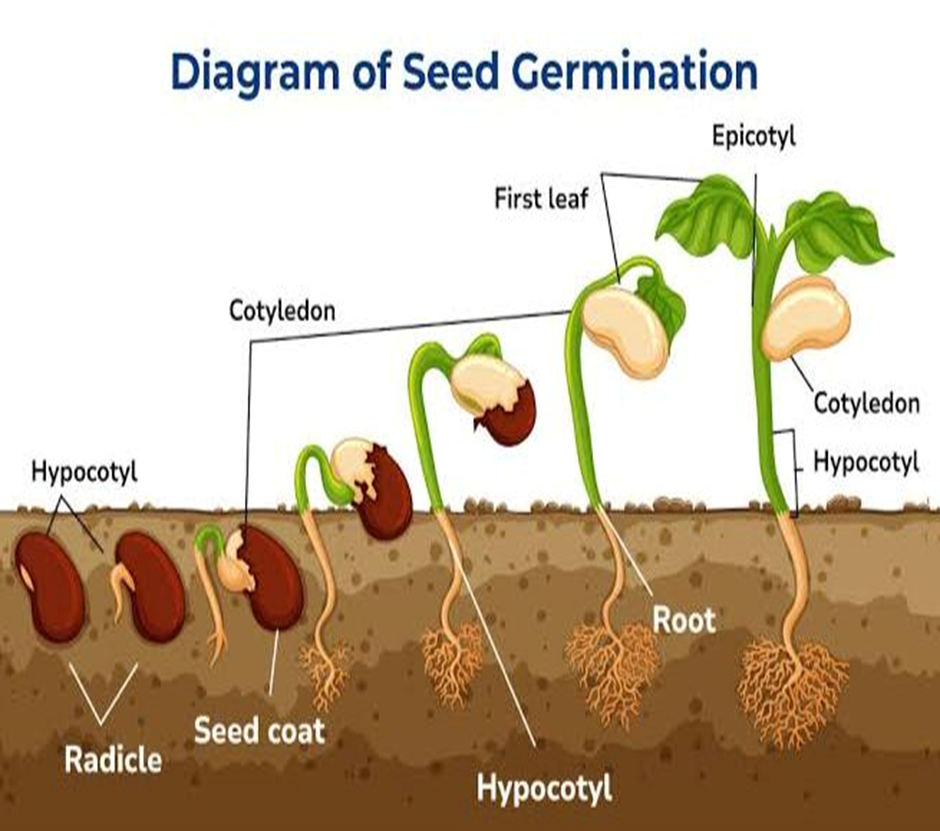
🔷️Germination of seeds:- Germination is the process by which plants develops into a new plant under suitable conditions.
Conditions required for Germination:-
- Water:- To activate enzymes and soften the seed coat.
- Oxygen:- For aerobic respiration to provide energy.
- Suitable temperature:- For enzyme activity.
- Light may or may not be needed(depending on the seed type).