
Asexual Reproduction in organisms
🌟Introduction:-
Asexual Reproduction is a mode of Reproduction that requires only one parents. No gametes fertilises, and the off springs aerobic genetically identical(clones to the parent). Lets study asexual Reproduction in details.
🌟Key concept:-
Asexual Reproduction is a quick process. It is common in Unicellular and simple multicellular organism. No variation occurs(only mutation can bring changes), usually take place by mitotic division. These are very effective in stable environment.
Type of Asexual Reproduction:-
Binary fission:-
- Parents cells splits into two equal parts.
- Seen in Unicellular organism.
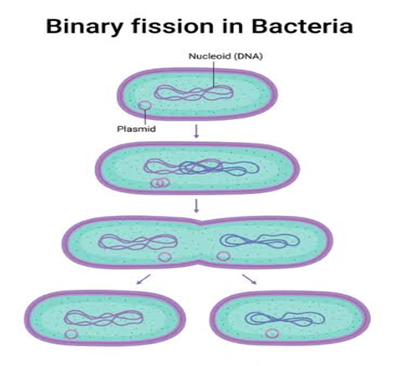
Example:- Amoeba and Paramecium.
Budding:-
- A bud is developed on parent’s body due to cell division.
- Bud grows and detached to form a new organism.
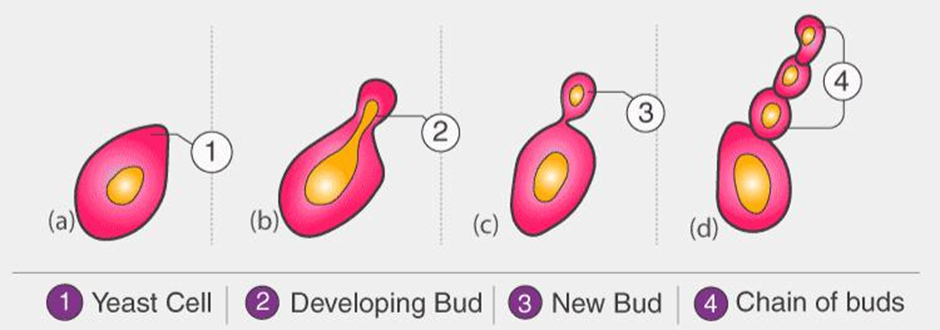
Example:- Hydra and yeast.
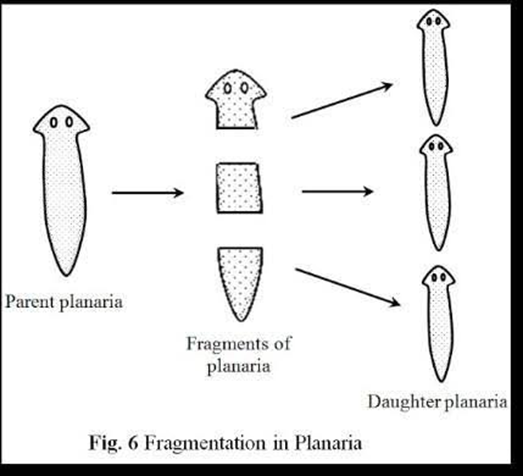
Fragmentation:-
- The body breaks into fragments and each fragment grows into a new organism.
Example:- Spirogyra.
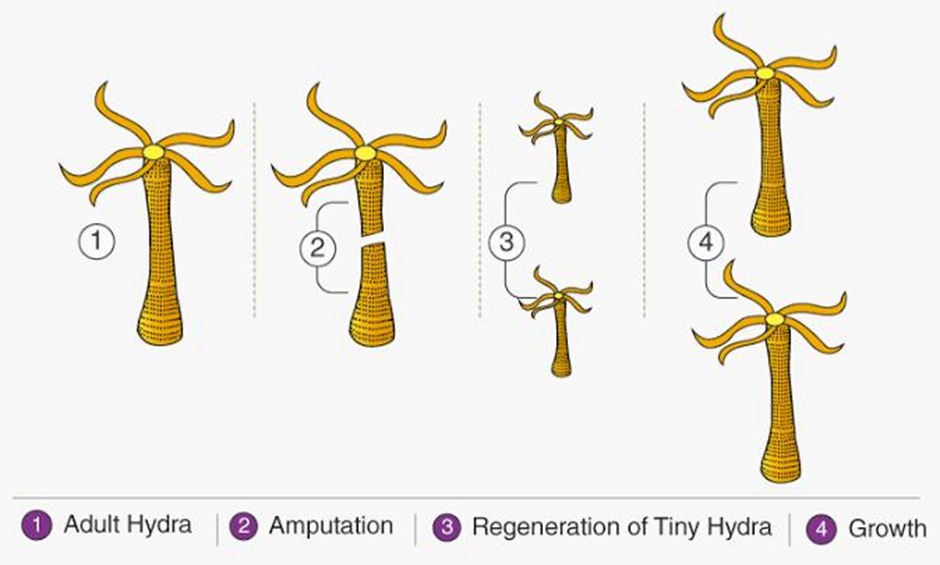
Regeneration:-
- Ability of organism to regrow lost body parts.
- In some, parts regenerate into entire new organism.
Example:- Planaria and Hydra.
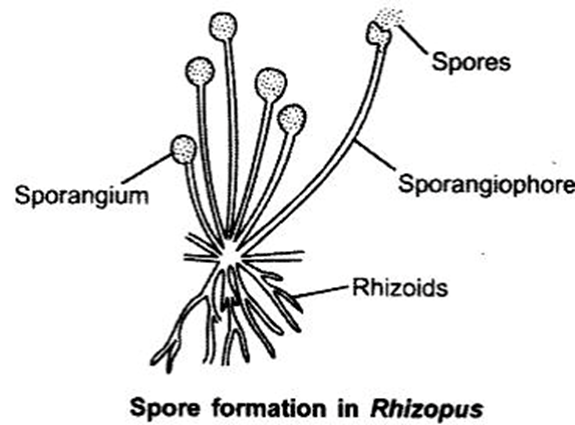
Spore formation:-
- Organism produce tiny pore(like seeds) that grow into new Individuals.
- Spores are covered with thick walls trembled survive harsh conditions.
Natural Vegetative propagation:–
- Natural Vegetative propagation is the process by which plant grow form its Vegetative sides like (stem, roots , and leaf) of the parent without human involvement.
- It’s a for, of asexual Reproduction in plants.
🔷️Vegetative parts involved:-
- By Roots:- Some plants develop new shoots from their roots.
Example:- sweet potato, dalhia , and carrot.
- By stem:- underground stem or modified stems give rise to new plants.
Example potato, ginger, onion, garlic etc.
- By leaves:- Some plants can grow buds on their leaves that falls and grow into new plants.
Example:- Bryophyllum, Begonia
🔷️Advantage of Natural Vegetative propagation:–
- Fast Reproduction
- No seed needed
- New plant retain all traits of the parent plant
- Helps plant to survive harsh conditions condition.
Artificial Vegetative propagation:-
- Artificial Vegetative propagation is a method used by humans to grow new plants from Vegetative parts (roots, stem and leaves)
- Commonly used in horticulture and agriculture to reproduce plants with desirable traits(taste, colour, resistance)
Methods of Artificial Vegetative propagation:-
- Cutting:- Small part of stem or root is cut and planted in soil. It grows into new plant under suitable conditions.
Example:- Rose and sugarcane
- Layering:- A branch is bent to the ground and Covered with soil. Root developed into the buried part and branch is cutter down and planted.
Example:- Jasmin, strawberry and mint
- Grafting:- Two plants are joined together to form stock(rooted plant) and scion(stem of another plant)
Example:- Mango, apple and orange.
Tissue culture:-
- A modern method Artificial Vegetative propagation. Involves growing a plant from a small piece of plant tissue, in sterile conditions using nutrients rich medium.
This method is also called Micropropagation.
Steps involved in tissue culture:-
Step 1:- A small art of plant called(explant) is choose. Ex:- root tip, leaf piece etc
Step 2:- The explant is cleaned and sterilized to kill all microbes.
Step 3:- The explant is placed in a gel like growth medium containing:- nutrients, vitamins and hormones(like auxins and Cytokinins).
Step 4:- The explant divides and forms a callus.
Step 5:- The callus is transferred to another medium to form roots and shoot, a complete plantlet developed
Step 6:- The plantlet is moved to soil and grow into mature plant.
Advance tissue culture:-
- A large number of plants can be grown quickly.
- All plants are genetically identical
- Can grow disease free plants
- Year round production is possible in controlled labs.
Are exact copies are made in Asexual Reproduction?
Yes in asexual reproduction exact copies are made because it involves only one parent, hence there is no fusion of gametes and no Mixing of genetic material. Offspring are generally Produced by mitotic cell division.