
Understanding Ecosystems
📚 Key Concepts
🔹 Real-Life Example
Imagine a bustling neighborhood where everyone has a specific job – the baker, the teacher, the garbage collector, the police officer. If the garbage collector goes on strike, soon the whole neighborhood suffers! Similarly, in a forest ecosystem, trees are like apartment buildings providing homes, deer are like the residents, wolves are like the security guards, and decomposers are like the cleanup crew. Remove any one component, and the entire “neighborhood” struggles to function.
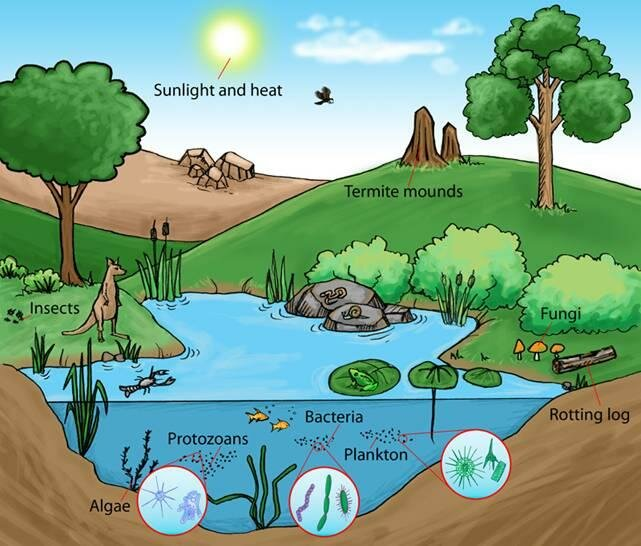
🔹Ecosystem: An ecosystem is a community of living organisms (plants, animals, and microbes) interacting with each other and their non-living environment (air, water, soil, climate) in a specific area.
🧪 Important Concepts
🔸 Components of an Ecosystem
Biotic Components (Living):
- Producers (Autotrophs): Green plants, algae that make their own food
- Primary Consumers (Herbivores): Grass-eating animals like deer, rabbits
- Secondary Consumers (Carnivores): Meat-eaters like foxes, small birds of prey
- Tertiary Consumers (Top Carnivores): Lions, eagles, sharks
- Decomposers: Bacteria, fungi that break down dead material
Abiotic Components (Non-living):
- Physical factors: Temperature, light, humidity, rainfall
- Chemical factors: pH, oxygen levels, nutrients in soil
- Geological factors: Soil type, rock formations, topography
🔹 Types of Ecosystems
Natural Ecosystems:
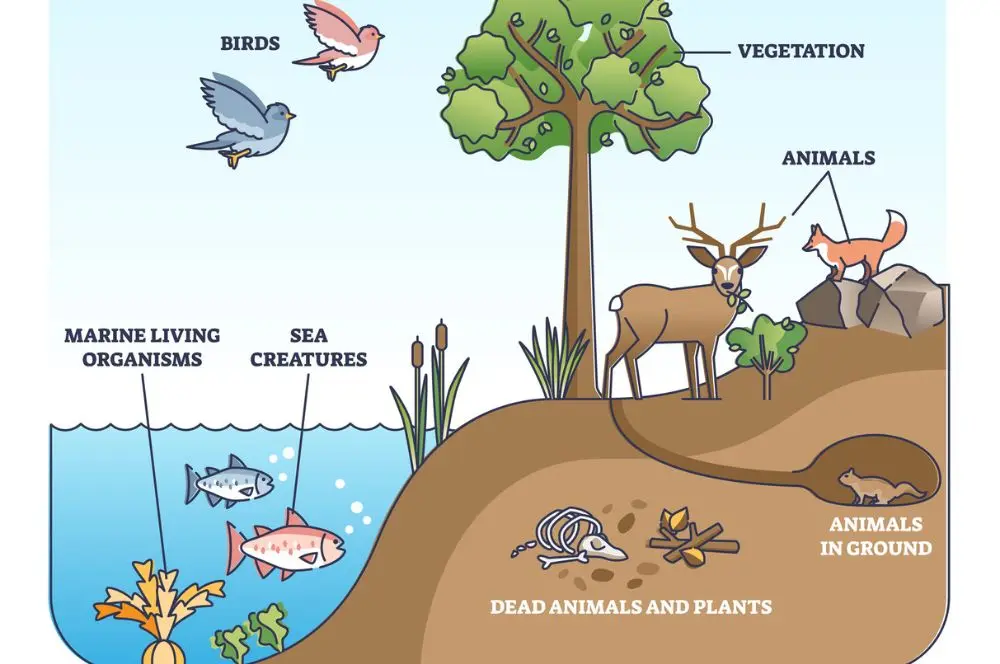
- Terrestrial: Forests, grasslands, deserts, mountains
- Aquatic: Freshwater (rivers, lakes), marine (oceans, seas)
Artificial Ecosystems:
- Agricultural fields, gardens, aquariums, zoos
🔍 Advanced: Energy Flow and Food Chains
Energy flows in one direction through ecosystems: Sun → Producers → Primary Consumers → Secondary Consumers → Tertiary Consumers
Only about 10% of energy transfers from one level to the next – this is why there are fewer lions than zebras, and fewer zebras than grass plants!