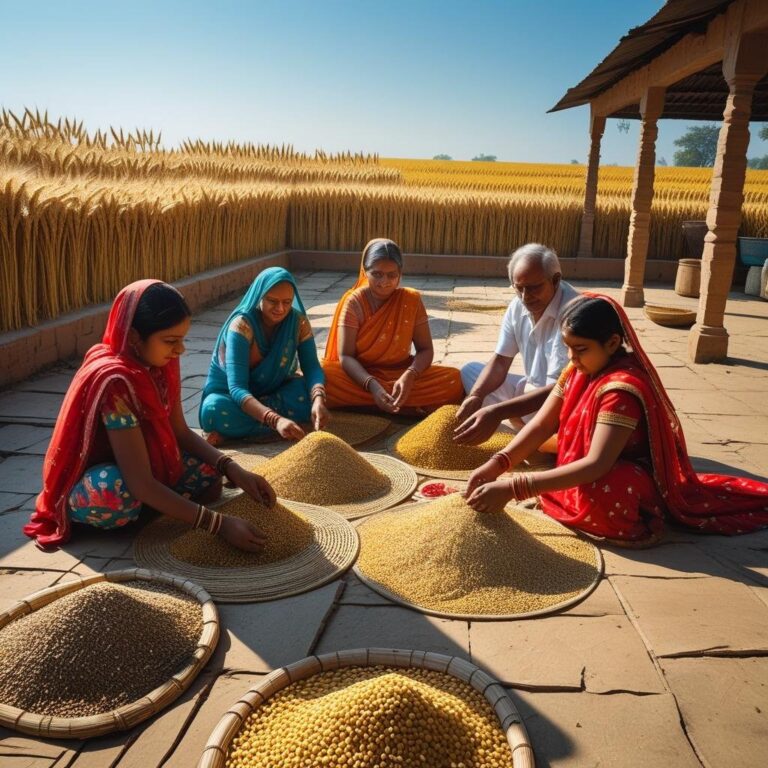
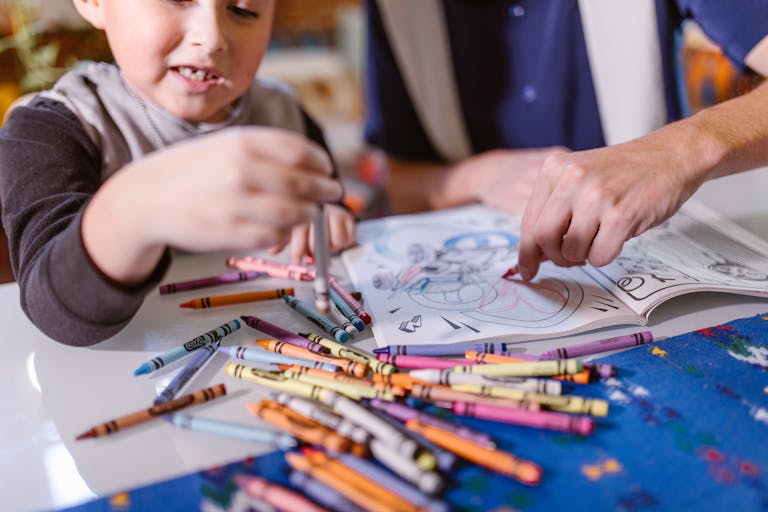
Meet Ghulan and Sheeta, two curious students starting their new school year! Their science teacher Madam Vidya shows them how everyday objects are made from different materials.
🔎 6.1 Observing Objects
Everything around us is made of materials like:
📄 Paper🌳 Wood👕 Cloth🥛 Glass🔩 Metal🧴 Plastic🏺 Clay
🛠️ Activity: Material Hunt
List 5 objects and their materials:
| Object | Material |
|---|---|
| Notebook | Paper |
| Water bottle | Plastic |
| Window | Glass |
🗂️ 6.2 Grouping Materials
We can group materials by:
- 🌈 Color
- ✨ Shine (lustre)
- 🖐️ Feel (hard/soft)
- 👀 See-through ability
🥤 Tumbler Materials
Different materials can make tumblers
❓ Why not use cloth tumblers? They can’t hold water!
🔬 6.3 Material Properties
✨ Lustre (Shine)
Lustrous: Metals like gold, silver, copper (shine)
Non-lustrous: Wood, paper, rubber (dull)
💡 Fun Fact: “All that glitters is not gold!” Some shiny things are just polished.
💪 Hardness
| Hard | Soft |
|---|---|
| Stone | Sponge |
| Iron | Rubber |
| Diamond | Cotton |
👀 See-Through Ability
🔍 Transparent
Clear glass, water
🌫️ Translucent
Frosted glass, butter paper
🚪 Opaque
Wood, metals
💧 Solubility
Soluble: Sugar, salt (disappear in water)
Insoluble: Sand, chalk (don’t disappear)
🧪 Activity: What Dissolves?
Try mixing these in water:
- 🍬 Sugar → Disappears!
- 🧂 Salt → Disappears!
- 🏖️ Sand → Stays!
⚖️ Mass & Volume
Mass: How much matter is present (kg/g)
Volume: Space occupied by matter (L/mL)
Example: 500 mL water bottle → Volume = 500 mL
🧩 6.4 What is Matter?
Matter = Anything with mass + volume
Examples: Water, air, books, you!
🌬️ Wait, air is matter? Yes! It has mass and takes up space.
📝 Summary
- 🧱 Objects made from different materials
- 🗂️ Group materials by properties (shine, hardness, etc.)
- 👀 Three types: Transparent/Translucent/Opaque
- 💧 Some dissolve (sugar), some don’t (sand)
- ⚖️ All matter has mass & volume
🎮 Fun Activities
♻️ Recycled Art
Make something useful from waste materials
🕵️ Material Detective
Find 5 objects at home and identify their materials
🧪 Kitchen Science
Test what dissolves in water (sugar, oil, flour)
🧠 Let Us Enhance Our Learning – Class 6 Science Chapter 6: Materials Around Us
1. 🍱 Sorting Kitchen Items
Observe your kitchen and suggest a better method to sort items. Example: Sort by food type (grains, spices, liquids), usage (daily/occasional), and storage need (airtight/cold).
2. 🔠 Unscramble and Match
| Column I (Scrambled) | Column II (Properties) |
|---|---|
| T R E M A T | (b) Occupies space and has mass |
| U L S B E L O | (d) Mixes completely in water |
| T N E R P A S N A R T | (a) Objects can be seen clearly through it |
| E R U S T L | (c) Shiny surface |
3. 🧊 Why Transparent Containers?
Transparent containers help us easily identify the items stored without opening them. This saves time and prevents unnecessary handling.
4. ✅ True or False
- Wood is translucent while glass is opaque. — False ❌ (Correction: Wood is opaque; glass is transparent)
- Aluminium foil has lustre while an eraser does not. — True ✅
- Sugar dissolves in water whereas sawdust does not. — True ✅
- An apple is a matter because it occupies no space and has mass. — False ❌ (Correction: It occupies space and has mass)
5. 🪑 Best Chair Materials
- Hardness: Iron, Wood
- Lightweight: Plastic, Bamboo
- Not Cold in Winter: Wood, Bamboo
- Easy to Clean: Plastic, Iron
6. 🗑️ Containers for Waste
- Food Waste – Plastic or steel bins (easy to wash)
- Broken Glass – Thick cardboard or metal (doesn’t tear easily)
- Wastepaper – Cloth or paper bags (eco-friendly and recyclable)
7. 🧱 Air vs Wooden Door
Correct Answer: (i) Transparent, Opaque
Air lets light pass through; wood blocks it.
8. ❓ Identify Materials X and Y
Material X: Rigid and dissolves — likely sugar or salt (hard, soluble)
Material Y: Soft and insoluble — likely wheat flour or clay
9. 👤 Who Am I?
(i) Identify Me:
- (a) Gold or Aluminium
- (b) Air or sponge
- (c) Sugar or salt
- (d) Opaque plastic or wood
- (e) Air
(ii) Your Turn! Write your own ‘Who am I?’ riddle using properties like hardness, solubility, or transparency.
10. 💧 Soluble and Insoluble Pairs
Soluble Pairs:
– Water + Glucose
– Vinegar + Water
Insoluble Pairs:
– Mustard oil + Water
– Wheat flour + Water (forms paste but doesn’t dissolve)