CBSE Class 6 Geography Chapter 2 – Oceans and Continents includes exciting questions and activities to help students learn about continents, oceans, and maps. Below are the simplified answers and activity guides, perfect for Class 6 students following the latest NCERT syllabus.
1. What are oceans and continents? What are their names and distribution?
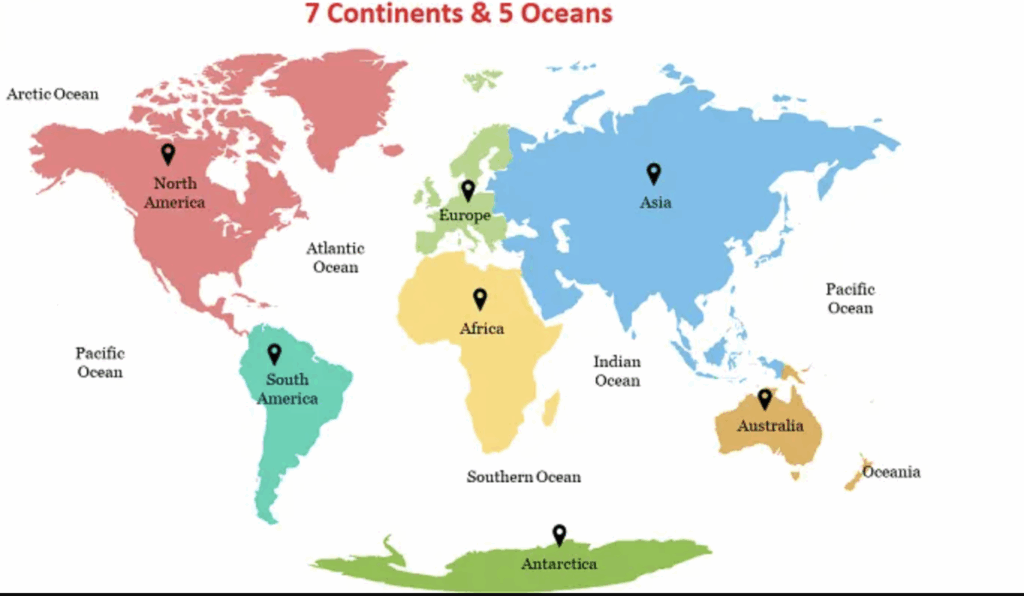
Oceans are vast bodies of saltwater that cover nearly 71% of the Earth’s surface. The five major oceans are: Pacific Ocean, Atlantic Ocean, Indian Ocean, Southern Ocean, and Arctic Ocean.
Continents are large landmasses. The seven continents are: Asia, Africa, North America, South America, Antarctica, Europe, and Australia.
2. How do oceans and continents impact life on Earth?
Oceans provide rain, regulate climate, produce oxygen, and support marine life. Continents host human life, forests, wildlife, and agriculture. Both influence trade, culture, travel, and natural disasters (like tsunamis and cyclones).
📘 Chapter Summary
- 🌊 Oceans cover 3/4th of Earth, making it the Blue Planet.
- 🗺️ Continents are the large landmasses visible on a globe.
- 🌐 Five Oceans: Pacific, Atlantic, Indian, Southern, Arctic
- 🌍 Seven Continents: Asia, Africa, North America, South America, Europe, Australia, Antarctica
- ⚠️ Oceans cause rain (monsoon) but also disasters like cyclones and tsunamis.
- 🫁 Oceans produce over 50% of the world’s oxygen – they are the planet’s lungs.
🧪 Activities & Discussions
💬 Think About It:
- If Earth has so much water, why do we still talk about water shortage?
➡️ Because most of it is saltwater; only a tiny amount is freshwater usable by humans. - Ways to save water you’ve seen:
➡️ Taps turned off properly, rainwater harvesting, bucket instead of shower, reuse of water for plants.
🌐 Let’s Explore (Oceans table)
| Ocean | Northern Hemisphere | Southern Hemisphere |
|---|---|---|
| Pacific Ocean | ✔️ | ✔️ |
| Atlantic Ocean | ✔️ | ✔️ |
| Indian Ocean | ✔️ | ✔️ |
| Southern Ocean | ❌ | ✔️ |
| Arctic Ocean | ✔️ | ❌ |
📏 Continents by Size (Smallest to Largest)
- Australia
- Europe
- Antarctica
- South America
- North America
- Africa
- Asia
📌 Key Takeaways
- 🌍 Earth has 71% water (oceans) and 29% land (continents)
- 🏝️ Oceans and continents affect weather, life, and culture
- 💨 Oceans give us rainfall but also cause tsunamis & cyclones
- 🐟 Marine life is rich but threatened by pollution and overfishing
1. Explain the following terms:
(a) Continent:
A continent is a very large landmass. The Earth has seven continents: Asia, Africa, North America, South America, Antarctica, Europe, and Australia.
(b) Ocean:
An ocean is a large body of salty water. Oceans cover more than 70% of the Earth’s surface. The five oceans are: Pacific, Atlantic, Indian, Southern, and Arctic Ocean.
(c) Island:
An island is a piece of land that is completely surrounded by water.
Examples: Sri Lanka, Andaman and Nicobar Islands, Greenland.
2. Let us draw – Without looking at the maps in this chapter, draw the continents free hand on a sheet of paper and colour them. Then compare your drawing with the map of oceans and continents in the chapter.
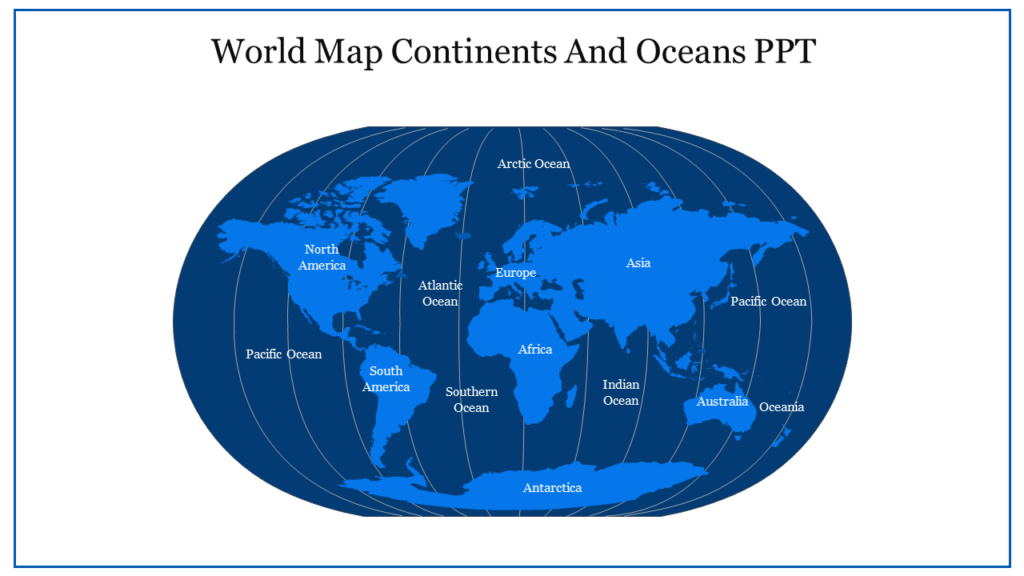
Instructions:
📝 Take a blank sheet of paper.
✏ Try to draw the shapes of all seven continents from memory.
🎨 Colour each continent with a different colour:
– Asia – Yellow
– Africa – Orange
– North America – Red
– South America – Green
– Antarctica – White
– Europe – Pink
– Australia – Blue
📖 Finally, open your NCERT textbook and compare your drawing with the actual world map.
3. Let us do – On the outline map of the world given below, label all the continents and oceans.
Instructions:
🗺️ Use the blank world map from your textbook or print one.
✍ Label the seven continents:
– Asia
– Africa
– North America
– South America
– Antarctica
– Europe
– Australia
🌊 Label the five oceans:
– Pacific Ocean
– Atlantic Ocean
– Indian Ocean
– Southern Ocean
– Arctic Ocean
✅ Use neat handwriting, capital letters, and different colours for continents and oceans.
📌 Tip: These activities help students practice map skills and learn the names and positions of continents and oceans. It builds a strong base for further geography topics.