
Formation of Winds
📚 Key Concepts
🔹 How Winds Form
Wind is air in motion caused by pressure differences. Air always moves from high pressure regions to low pressure regions.
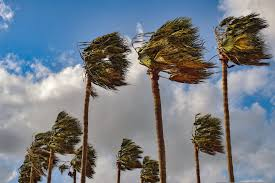
Process of Wind Formation:
- Uneven heating of Earth’s surface creates temperature differences
- Warm air rises (becomes less dense) creating low pressure
- Cool air sinks (becomes more dense) creating high pressure
- Air flows from high pressure to low pressure areas
- Continuous circulation creates wind patterns
🔹 Land and Sea Breezes
Sea Breeze (Day time):
- Land heats faster than water
- Warm air over land rises → Low pressure over land
- Cool air over sea → High pressure over sea
- Wind blows from sea to land
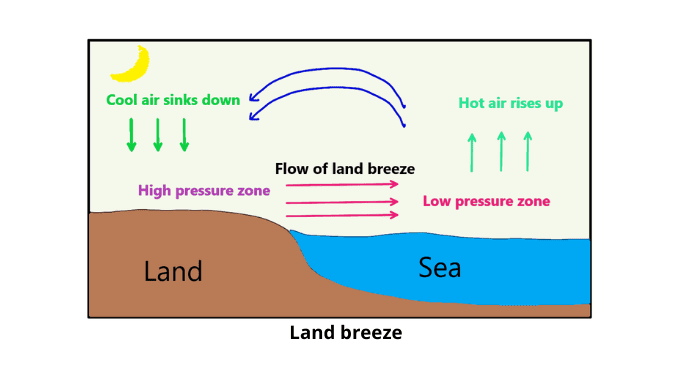
Land Breeze (Night time):
- Land cools faster than water
- Cool air over land → High pressure over land
- Warm air over sea → Low pressure over sea
- Wind blows from land to sea
🔹 Factors Affecting Wind Speed
Greater pressure difference = Stronger winds
Speed factors:
- Temperature difference: Greater difference = Stronger winds
- Distance: Closer pressure systems = Stronger winds
- Geographical features: Mountains, valleys affect wind patterns
- Earth’s rotation: Coriolis effect influences wind direction
🔹 Global Wind Patterns
Major Wind Systems:
- Trade Winds: Blow toward equator
- Westerlies: Blow from west to east in mid-latitudes
- Polar Easterlies: Cold winds from polar regions
- Monsoons: Seasonal wind reversals